
The Learning Curve - Fly Further with Copilot
Welcome to the March edition of The Learning Curve!
This month, we're spotlighting Copilot: what it can do, how teams are learning it, and how QA is helping people get comfortable using it in their everyday work.
Check out our Copilot hub, a real-world adoption story, and the TeamQuest experience transforming how people learn AI.
Unlock smarter ways of working, and have some fun doing it, with QA!

QA + Microsoft: Empowering Teams to Work Smarter with Copilot
Microsoft 365 Copilot is quickly becoming part of the everyday workflow, but most are still figuring out how to get the most out of their AI investment. Early users are seeing real benefits like higher productivity, better work quality, and even improved work-life balance.
QA's Copilot hub pulls everything into one easy place: learning pathways for different roles, safe environments to practice, expert insights, FAQs, and a big mix of courses for those wanting to dive deeper.
The big idea? Copilot isn't just a new feature. It's a new way of working. And the more comfortable people feel experimenting and learning, the more they get out of it.

How QA Helped Early Adopters Get Copilot-Ready
Microsoft turned to QA to prepare early adopter teams for Microsoft 365 Copilot, helping them build the practical skills needed to use AI-driven productivity tools confidently and effectively.
Inside the case study:
- How QA designed hands-on bootcamps to equip IT teams with real-world Copilot deployment skills.What organizations learned about safely implementing Copilot across Teams, Word, Excel and more.
- The practical insights early adopters gained to help them lead Copilot rollouts with confidence.
Discover the practical lessons that turned Copilot from potential to impact.

TeamQuest: AI Adventures
What do you get when Microsoft asks QA to rethink how poeple learn AI? A training experience that looks nothing like traditional training.
TeamQuest takes AI learning and turns it into a fast-paced, gamified challenge. Complete with storylines, teamwork, surprise twists, and hands-on problem solving. Instead of just learning about Copilot, learners apply what they learn to complete missions, fix real-world challenges, and build practical confidence.
From spy-themed prompting missions to high-stakes compliance challenges and AI-agent building, each workshop puts learners inside a scenario where AI skills actually matter. It's immersive, energetic, and designed to make learning stick.
The best part? Participants walk away saying it's "massively useful", "10/10", and "exactly the thing that accelerated their real-world AI capability."
TeamQuest isn't a course. It's a glimpse of the future of digital learning.
What you've missed
February 2026

QA and NVIDIA Team Up to Accelerate AI Skills - Globally
AI is rapidly moving from experimentation to execution, and organizations around the world are racing to build the skills needed to keep up. QA is now an NVIDIA Deep Learning Institute (DLI) training partner. This will bring NVIDIA's leadership in AI and accelerated computing together with QA's hands-on, role-based learning.
While the announcement focuses on the UK, the implications are global. The skills, platforms, and challenges described are the same ones North American organizations are facing today: turning AI investment into real-world impact, upskilling techincal teams quickly, and preparing learners to deploy AI responsibly and at scale.
For North American teams, this signals where AI learning is headed. As AI becomes embedded across engineering, data, and business roles, building the right capabilities early will be critical to staying competitive.
AI transformation isn't coming, it's already here. The advantage belongs to the organizations that prepare their people now.

Fundamentals of Deep Learning (NVIDIA-certified)
Deep learning is quickly becoming a foundational skill for teams building and scaling AI solutions. QA’s Fundamentals of Deep Learning course, certified by NVIDIA, is a one-day, hands-on workshop for professionals with basic Python knowledge—designed to move teams beyond AI theory and into building real, working models with confidence.
Inside the course:
- Hands-on training in computer vision and natural language processing, using real-world use cases
- Learn to train deep learning models from scratch and accelerate results using transfer learning and pre-trained models
- Practical experience with TensorFlow, Keras, and GPU-accelerated environments no local setup required
- Earn an NVIDIA Deep Learning Institute certificate, validating real, job-ready AI capability

From AI Platforms to AI Capability: Building Skills that Scale
AI platforms alone don’t create advantage. Capability does. As organizations invest heavily in accelerated computing and generative AI, the real differentiator is whether teams know how to build, optimize, and deploy AI in production.
As Dr. Vicky Crockett, AI Portfolio Director at QA, puts it: “If AI is the new industrial revolution, NVIDIA is the engine room and skilled people are the operators. Invest in both the platform and the capability, and you don’t just automate the factory of modern computation, you set the production pace for the next decade.”
That philosophy underpins QA’s NVIDIA-certified training pathways, designed to help organizations move from AI pilots to production faster. From deep learning fundamentals to generative AI, LLMs, and agentic AI, these structured pathways give teams hands-on, certified skills aligned to real-world use cases, not just theory.
For US organizations, this means a clearer, faster route to scaling AI capability across engineering, data, and product teams. It ensures AI investment translates into measurable impact and long-term competitive advantages.
January 2026

Put your Leadership Knowledge to the Test
How ready are your leadership skills for 2026? Our new Leadership Knowledge Check is a short, fast-paced assessment designed to challenge your thinking and spark new insights.
Answer a few quick questions, then receive personalized feedback from our experts to help you understand where your strengths lie and where you can level up next. You can also contact us to set up a free Leadership Knowledge Check for your entire team, of any size.

Ready for 2026?
2026 is where AI ambition meets reality. Agentic AI is moving from pilots to production, AI Adoption and Scalability remains a challenge for 90 percent of organizations, and AI Prompting is quickly becoming a core workplace skill as generative AI embeds itself into daily workflows.
But it doesn’t stop with AI. Demand is surging for Cloud Native Engineering, Cloud Security Engineering, and Data Engineering as data volumes explode and systems grow more complex. Meanwhile, FinOps, Observability and AIOps, and Project Management are redefining how teams control cost, manage risk, and deliver at speed.
Our 26 In-Demand Skills for 2026 brings it all together, combining expert insight, real-world context, and clear learning pathways across technical, leadership, and resilience-focused skills.
The question is no longer what’s changing, it’s whether your teams are ready for what’s coming next…

Employers are prioritizing certifications that prove real, job-ready capability. Our latest analysis highlights the credentials most frequently appearing in job postings for 2026.
Inside the list:
-
PMP (Project Management Professional) leads the way for complex, enterprise-wide transformation programs
-
Cybersecurity credentials like CISSP, CISM, and CISA remain critical as security and risk move to the boardroom
-
Microsoft certifications continue to surge with Azure, cloud, and Copilot adoption
What's next in AI? 10 predictions for 2026
As organizations head into 2026, AI is no longer something they are preparing for. It is something they are actively working with. Adoption has accelerated, but many businesses are still stuck between pilots and true scale. According to Dr. Vicky Crockett, the next phase of AI is about turning experimentation into everyday capability.
“Last year, we moved from awareness to action,” Crockett explains. “We shifted from talking about AI’s potential to rolling out all-staff training in prompting proficiency, because organizations are ready to start really applying new, powerful tools to their use cases.”
Her predictions point to AI becoming embedded across roles and tools. AI literacy will soon be as fundamental as basic digital skills, while assistants like Copilot make AI feel less like an add-on and more like part of daily work. As Crockett puts it, “AI is becoming the interface for everything.”
But the shift isn’t without challenges. From “pilot-itis” to poor-quality outputs, success depends on strong skills, governance, and human oversight. “The best AI outputs come from human expertise,” she warns. So how can your organization stay ahead in 2026?


AI is shaping every role in business, and success in 2026 depends on knowing the right skills for your role. QA’s AI Skills Hub brings together essential knowledge for everyone—from prompt engineering basics and AI literacy to data awareness and critical thinking with AI.
Leaders can explore AI governance, strategic adoption, and ethical decision-making, while technical teams can dive into advanced prompting, agentic AI systems, and LLM integration.
Discover the full range of AI skills and training for 2026.
December 2025

Meet Dr. Vicky Crockett:
Portfolio Director - Artificial Intelligence
Dr. Vicky Crockett is an experienced mathematician, educator, and AI leader with over 15 years of expertise spanning AI, data science, and applied learning across higher, further, and commercial education. As Portfolio Director for Artificial Intelligence at QA, she leads the development of innovative AI learning solutions that empower organizations to apply complex concepts safely and effectively in the workplace.

What happens when AI becomes the interface for everything?
At OpenAI's Dev Day, one announcement changed the game: apps are now running inside ChatGPT. Not integrations, full apps that live natively within the AI. Early partners like Canva and Spotify are already live, and soon any developer can publish directly into the ecosystem.
For Dr. Vicky Crockett, this signals a seismic shift:
"When AI becomes the main interface, prompting becomes the new UX. But most people don't realize how much power - and risk - sits in the way they phrase a single request."
This shift could create a new AI divide, where those who understand how to work with AI surge ahead, and those who don't get left behind. And for businesses, visibility may soon depend on whether your tools exisist inside the AI, not outside it.
So what happens when the interface for everything becomes an AI, and your next competitor is just a prompt away...?
The AI readiness playbook: Skills, security & strategy for impact
AI is no longer optional - it's a strategic imperative. Our exclusive whitepaper brings together practical insight on:
- How AI changes the security landscape
- Why governance cannot be an afterthought
- Why skills and organizational capability are essential to resilience
- How to build operational discipline for AI systems


Driving AI success across the enterprise
As AI becomes more and more central to enterprise strategy, executive involvement is rising sharply. CEO engagement jumped from 26% to 55%, COO from 2% to 41%, and CFO from 1% to 38%. Yet, tactical teams like IT, security, and data specialists are often less involved, creating a potential gap between strategy and execution.
Dr. Vicky Crockett highlights the importance of balance:
"Research shows C-suite are getting ever more involved in AI decision making, which on the surface is great to see. The road to success with AI rollouts of any kind is not only in the role of executive champions but also in departments like finance—who have historically been seen as potential blockers—turning from gatekeepers into enablers." She adds that deep engagement from IT, security, and data teams ensures decisions remain grounded and practical.
Dr. Crockett stresses that true AI success depends on integrating people, process, and technology.
"Increased C-suite involvement is a sign of maturity, but it mustn't come at the cost of taking AI 'out of the hands' of those who'll use it. Ensure the continued deep involvement with key on-the-ground teams like security, IT, and data, for a holistic and well-informed view. This is how you'll balance speed with safety."
The key takeaway: AI adoption isn't just a technology rollout, it's an organizational shift. Leaders must embrace a collaborative, cross-functional approach, embedding AI literacy across the enterprise while ensuring decisions are informed, transparent, and safe.
New at QA: SimuLabs
SimuLabs are an exciting addition to learning with QA, putting learners in realistic workplace scenarios alongside AI colleagues. Teams practice technical tasks, communication, and decision-making in a safe, hands-on environment, building confidence and job-ready skills without any risk.

End of Year Recap: Customer Advisory Board
Our November Customer Advisory Board (CAB) brought together leaders across industries to share what's truly working in capability building, and what still gets in the way.
The message was clear: teams don't need more content, they need capability that sticks.
Leaders agreed that workflow-embedded practice, manager sponsorship, and AI-enabled reinforcement are now the biggest drivers in performance.
See the key insights and principles shaping capability in 2025 below.

November 2025

Meet Paddy Dhanda:
Portfolio Director - Product Discovery, Design & Agile
Paddy Dhanda is an experienced product and Agile professional with over 20 years in Business Analysis, Product Management, and Agile Coaching across industries including Financial Services, Insurance, Telecommunications, and Automotive. As Product Discovery, Design & Agile Practices Portfolio Director at QA, he leads initiatives to improve workplace collaboration and human skills for the future of work.
Replit, Vibe Coding, and the Rise of the Citizen Developer
After nearly a decade of trial and error, Replit has found its market. The AI-powered platform recently tripled its valuation, growing revenue from $2.8 million to over $150 million in under a year and the company projects its revenue could reach $1 billion by the end of 2026. They've done this by focusing on nontechnical users and creating the first agent-based coding experience. This shift is helping everyone, not just professional developers, bring their software ideas to life.
For Paddy Dhanda, the implications are both personal and professional:
"It was Saturday afternoon and my 13-year-old son was glued to his phone watching YouTube. I’d been following a new trend called vibe coding, where you describe what you want in plain language and AI writes the code. Since my son loves computer games, it felt like the perfect chance to experiment together."
"Within minutes, he was prompting ideas for a new Dolphin game, a cross between Minecraft and Pokémon. Four hours flew by, and by the end, he had created Dolphin Quest. He then asked me, ‘Dad, if AI lets anyone make a game, won’t that mean we’ll end up with bad games?’ I smiled and said, ‘Maybe. But doesn’t that also mean more creativity is unleashed into the world?’”
Paddy sees this story as a snapshot of a much larger trend. AI is removing the friction of software creation. What once required large teams, months of work, and big budgets, can now be acheived by anyone armed with curiosity and a laptop.
"We're entering the age of the citizen developer. By 2026, they’re predicted to outnumber professional developers four to one. Product skills are evolving faster than ever, and if you’re in a product team today, it’s time to ask: how will you stay ahead and keep your competitive advantage?”
Replit's success illustrates a shift in the software landscape: creativity and innovation are no longer limited by coding expertise. The next generation of developers may come from unexpected places, transforming how teams build products and bring ideas to life.
World in "Dolphin Quest"
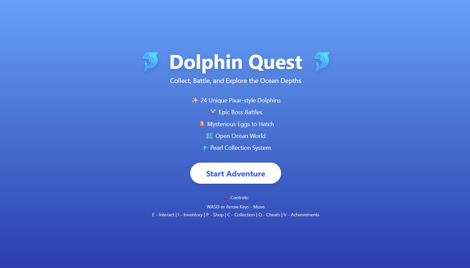
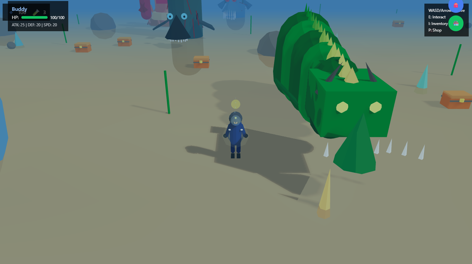
3D World in "Dolphin Quest"
A Year of Tech Failures - and What They Can Teach Us
Join Paddy Dhanda as he chats with MIT Technology Review’s Charlotte Jee about the biggest tech failures of the year — from stranded astronauts to runaway AI. Together, they explore what these mishaps reveal about overconfidence, complexity, and why humility and user empathy are key to building better.


Mastering Product Superpowers in the Age of AI
Host Paddy Dhanda explores how product professionals can master the human skills AI can’t replicate. In this episode, John Gordon shares his journey from the military to launching AI-driven startup Acelo, demonstrating practical ways to use AI for product requirement documents, low-code automation, and boosting strategic thinking.
Agile Project Management: Accelerate Success with Confidence
Most organizations adopt Agile but struggle to make it work in practice. QA's 90-day Agile Project Management program turns theory into impact. Build leaders who drive collaboration, adaptability, and measurable business results through expert-led training and real-world application.

Level Up with our Latest AI & Product Courses
Explore our newest offerings designed to help your teams and product leaders harness AI, streamline discovery, and enhance decision-making—no coding required.
Designing AI Powered Products
Learn to design AI-enabled products without coding. This 1-day course shows product managers, UX designers, and business analysts how to map AI capabilities into user journeys, build intelligent agents, and create pilot roadmaps — all through hands-on exercises and design sprints.
ICAgile AI for Product Discovery Micro-credential
Accelerate product discovery with AI in this 3-hour ICAgile-accredited course. Product managers, designers, and analysts learn to uncover customer needs, generate ideas, and assess opportunities while keeping human creativity and ethics at the center. Hands-on exercises show how AI can inform smarter, faster product decisions.
ICAgile AI for Customer Insights Micro-credential
Gain actionable customer insights with AI in this 3-hour ICAgile-accredited course. Participants learn to generate profiles, uncover behaviours, simulate feedback, and make informed, ethical product and strategy decisions. Hands-on exercises show how AI can enhance understanding and drive better customer experiences.
ICAgile AI for Stakeholder Management Micro-credential
Learn to navigate complex stakeholder environments with AI in this 3-hour ICAgile-accredited micro-credential. Participants explore AI-assisted triage, sentiment analysis, and pattern recognition to prioritise input, tailor communications, and maintain trust—all while applying ethical principles to enhance decision-making and leadership effectiveness.
October 2025

Meet Richard Beck:
Portfolio Director - Cybersecurity
Richard Beck is a seasoned cybersecurity professional with over 15 years of experience, now focused on bridging the cyber skills gap through education and collaboration. As Portfolio Director for Cyber at QA, he leads initiatives to diversify the workforce and address critical skills shortages.
Brickstorm and the Rise of "Hostile Integrations"
When most people picture a cyberattack, they imagine something loud and disruptive - a system outage, ransomware note, or sudden data leak. BRICKSTORM is different. As Mandiant's latest data anaylsis shows, this backdoor can live undetected inside critical infrastructure for over a year, quietly siphoning data, mapping environments, and preparing for something bigger.
For QA's Cyber Portfolio Director, Richard Beck, the implications are stark: "Imagine an adversary who doesn't just steal your secrets, they silently rewrite your systems, wait for your product launch, and then use your own code as their malware. That's Brickstorm espionage. Intrusions will increasingly look less like attacks, and more like hostile integrations."
That shift changes the stakes for business leaders. The challenge is no longer just preventing a breach - it's operating as if adversaries may already be inside your systems and supply chain. Traditional perimeter defenses aren't enough when attackers exploit poorly monitored appliances, clone virtual machines, and hijack privileged credentials with stealth.
What's needed is a three part strategy: detection that hunts for subtle patterns of persistance rather than expired indicators; business resilience that ensures operations can continue under compromise; and recovery that's rehearsed and fast enough to rebuild trust before adversaries weaponize your own infrastructure. The lesson from BRICKSTORM is clear: if you aren't adapting your security model, you aren't just behind - you may already be compromised.
Scaling AI too fast, without safeguards, can expose your business to cyber threats, compliance failures, and stalled transformation.
QA's vendor-agnostic AI Security & Governance pathways equip every function to adopt AI responsibly and at scale.
Options to get started:
- Self-paced learning: Flexible, online modules to upskill teams at their own pace.
- Virtual instructor-led courses: Interactive sessions for technical, business, and security professionals.

Staying Ahead of BRICKSTORM
BRICKSTORM illustrates how advanced threat actors can quietly embed themselves in critical systems and supply chains. Richard Beck, QA’s Cyber Portfolio Director, shares key takeaways and questions to help organizations detect, respond to, and mitigate these stealthy threats.
For security teams:
- Run comrpomise assessments - assume traces are wiped.
- Re-audit SSO/MFA and cut legacy/test systems.
- Continuously model supply-chain threats (vendors, partners, MSSPs).
- Monitor "trusted" cloud traffic with behavioral baselining.
- Build memory forensics into incident response.
- Hunt for persistence and credential abuse - not just data theft.
Questions every executive should ask:
- Can we detect supply-chain threats without known indicators?
- How are SaaS vendors and MSSPs being monitored?
- Do we perform live compromise assessments?
- What's our detection time if attackers are already inside?
- Is our identity infrastructure (SSO/MFA) hardened and tested?
- What's our plan if we're used as a launchpad?
The Bottom Line:
Adversaries aren't just breaching systems - they're embedding in business models. If you're not actively challenging blind spots, you're funding your own compromise.
Cyber Bytes: Explore our Blog
Catch up on our latest blogs and explore fresh insights to sharpen your cybersecurity skills and stay ahead of emerging threats.
The rise of agentic AI
Don’t just fear agentic AI—use it. Find out how defenders can harness AI to stay proactive, resilient, and ahead of threats.
Aligning AI governance
One policy, one vision. Discover how unified AI governance reduces risk and unlocks enterprise-wide value.
Cyber insurance in crisis with AI blind spots
Don’t get caught off guard. Understand the evolving risks AI brings to cyber insurance and the steps your teams need to stay covered.

We’re marking 40 years of learning with a special thank-you — enjoy QA’s 40th birthday with an exclusive offer: 30 days’ free access to our Online Learning Platform."
Offer valid until November 15.
Explore the offer, events, and our latest L&D insights on the QA 40th Birthday Hub.
*Terms and conditions apply.

September 2025

Meet Megan Sutton:
QA Principal Solutions Consultant and Leadership & Business Expert
Megan Sutton is a learning and development leader with deep expertise in management, leadership, and personal effectiveness. With experience spanning multiple sectors, she has designed and delivered impactful solutions that support both individual growth and organizational success. A long-time champion of blended learning, Megan has led award-winning initiatives and helped shape forward-thinking digital learning strategies.
At QA, Megan partners with organizations to create meaningful, results-driven learning interventions. Known for her passion and energy, she brings a collaborative spirit to every project - constantly exploring new ideas and innovations to stay ahead in a rapidly evolving digital landscape.
The Talent Crunch in Semiconductors
AI is transforming the semiconductor and data-center industries - but instead of reducing jobs, it's accelerating demand for human expertise. Deloitte forecasts that by 2030, over 1 million additional skilled workers will be needed to design, build, and maintain the systems powering our digital world.
This creates both an opportunity and a challenge: companies must scale their workforces quickly, while ensuring employees can adapt to new tools and evolving technologies.
For QA's Principal Solutions Consultant, Megan Sutton, the answer isn't just chasing the latest technical certification. "Technical skills will continue to evolve at pace, but the real differentiator is the mindset we bring to change. Core capabilities like analytical and creative thinking equip us to adapt, no matter how roles transform."
While coding skills or hardware expertise may get someone in the door, it's adaptability, problem-solving, and creative thinking that future-proof careers and businesses. Organizations that invest in both cutting-edge skills and these enduring human capabilities will be best equipped to keep up with AI's rapid advances - and turn disruption into opportunity.

Train your Teams for the EU AI Act
The EU AI Act is here, and compliance is mandatory. If your AI touches the EU market, your teams need training now - or risk fines up to 7% of global turnover. QA makes it simple with our two options: a 40-minute digital self-paced course ($39.99 USD per learner) for individuals and small teams, or a live virtual session ($750 USD, now 50% off) for leaders who need to understand the Act's wider business impact. Get compliant, build trust, and stay ahead.



Emerging technologies like AI, cloud, cybersecurity, and data analytics are advancing faster than most organizations can keep pace with. The World Economic Forum reports that skills gaps are now the single biggest barrier to transformation, and Deloitte finds that 78% of executives see talent shortages as a major risk to business success. The result: upskilling has shifted from an HR initiative to a critical business imperative.
But the challenge isn't just about delivering more courses - it's about changing the approach. For Megan Sutton, the key lies in mindset: "It's not enough to upskill once - organizations must cultivate a genuine culture of learning. Teams thrive when curiosity is encouraged, experimentation is safe, and continuous growth is embedded into how work gets done."
The takeaway? One-off training won't close the skills gap. Organizations that embed continuous, adaptive learning into their strategy will not only equip their people with technical know-how, but also foster resilience, innovation, and readiness for whatever comes next.
We’re excited to launch six brand-new courses designed to help leaders and teams thrive in today’s fast-changing business world.
Whether you want a quick-hit short course (3 hours or less) or a deeper dive over 1–2 days, each program is packed with practical tools you can put to work right away—from leading change with confidence to boosting personal effectiveness.
Short Courses
Fundamentals of Communication
Sharpen your everyday communication skills to make messages clearer, more inclusive, and easier to act on. Gain practical techniques to adapt your style, strengthen listening, and build better collaboration across in-person, virtual, and hybrid teams.
Fundamentals of Coaching
Build the confidence to shift from giving answers to enabling ownership. Learn a simple five-question framework to hold focused, solution-driven conversations that empower others, even in high-pressure moments.
Developing your Analytical Thinking Skills
Advance beyond the basics to tackle complex, data-driven challenges with confidence. Learn how to evaluate tools, reduce bias, and balance rigorous analysis with timely decisions - building adaptable skills to solve problems and drive collaboration.
1-2 Day Courses
Leading Successful Change
Navigate complexity with confidence and model the behaviors that drive transformation.
Influencing and Persuading
Develop the skills to shape decisions, gain buy-in, and inspire action. Learn practical strategies to build trust, communicate effectively, and drive impact in today's fast-changing workplace.
Manage Conflict and Difficult Situations
Build the confidence to handle tension with clarity and empathy. Learn practical frameworks and tools to turn conflict into collaboration, strengthen relationships, and creative positive outcomes.
August 2025

Meet Stuart Scott:
QA Cloud Portfolio Director
Stuart Scott is a cloud learning expert with deep expertise in AWS technologies, certification pathways, and technical education. Over the past six years, he has led the AWS content team, building a world-class library of over 250 courses that has reached more than 1.3 million learners globally. Stuart is also the author of three books on AWS certification, reflecting his commitment to making complex cloud topics accessible and actionable for professionals at all levels.
At QA, Stuart empowers individuals and organizations to advance their cloud capabilities through clear, engaging, and outcomes-focused learning experiences. As an active member of the AWS Community Builders program, he mentors rising talent and contributes to the broader tech ecosystem. Known for his passion, precision, and deep technical knowledge, Stuart is driven by a mission to help others thrive in an increasingly cloud-first world.
Cloud Trends 2025: Sustainability and Supercloud Take Center Stage
Cloud computing in 2025 isn't just about migrating workloads - it's about smarter, greener, and more unified architecture. Across industries, two dominant themes are defining this evolution: the rise of the supercloud and the operationalization of sustainability.
"The cloud landscape is entering a new phase - defined by convergence, sustainability, and intelligence," says Stuart Scott. "These trends aren't theoretical - they're happening now, and they reflect the exact challenges our clients are navigating every day."
While many organizations are still wrestling with fragmented cloud estates, leading enterprises are moving quickly towards supercloud models that simplify complexity and unlock agility at scale.
"Supercloud is emerging as the new operational standard," Stuart explains. "It unifies multicloud, hybrid, and edge environments under a single control plane. It's not just about managing cloud - it's about managing outcomes."
At the same time, sustainability has moved from aspiration to expectation. Cloud leaders are embedding carbon-aware deployment policies and aligning engineering decisions with board-level ESG goals.
"Sustainability is no longer a soft KPI - it's a core performance metric," says Stuart. "We're seeing clients integrate cost and carbon data into real-time FinOps dashboards to make smarter, greener decisions."
AI is accelerating this evolution, pushing enterprises to rethink infrastructure around GPU demand, latency, and data gravity. In parallel, platform engineering and AI-powered CloudOps are enabling scalable, self-service environments that reduce waste and drive consistency.
Together, these shifts signal a broader transformation. Cloud in 2025 isn't just a destination - it's a foundation for innovation, built with intelligence, responsibility, and resilience.
"Cloud today isn't just about where things run - it's about how intelligently and sustainably they scale," Stuart concludes.
AI for Leaders: Shaping Strategy, Trust, and Team Performance in the Age of AI
Join us for the finale of our summer webinar series on August 20 or August 21! This session is designed for people leaders, project managers, and executives navigating the rapidly shifting AI landscape. It focuses not on tools, but on mindset - how to lead through uncertainty, model responsible AI adoption, and create space for innovation while mitigating risk.



Microsoft Elevate: Putting People First in the Age of AI
Artificial intelligence is no longer theoretical - it's reshaping how we work, learn, and live. With Microsoft Elevate, the tech giant is taking a bold step to ensure no one is left behind.
"AI isn't just transforming technology - it's redefining how we think about education and workforce readiness," says Stuart Scott. "It's brilliant to see Microsoft responding not just with innovation, but with purpose."
Launched as a major evolution of its social impact strategy, Microsoft Elevate will invest over $4 billion in AI tools, training, and nonprofit support over five years. Its goal? Equip 20 million people with AI credentials in just two years through the Elevate Academy.
"The message from the field is becoming increasingly consistent," Scott explains. "AI training isn't optional - it's foundational to building an inclusive future of work."
What makes Elevate stands out, he says, is its deep commitment to local communities and educators. Through partnerships with Code.org, The American Federation of Teachers, and initiatives like "Hour of AI," Microsoft is helping teachers gain the confidence and skills to bring AI into classrooms.
"The most sustainable change happens when we empower those who empower others," Scott notes. "This isn't just about tech upskilling - it's about building community resilience."
Beyond education, Microsoft is also advocating for national AI skills strategies, pushing for public-private collaboration that ensures opportunity isn't dictated by poscode or privilege.
"Elevate isn't just a skilling programme - it's a blueprint for digital equity... And at at a time when 60% of the global workforce will need new digital skills by 2030, that matters more than ever."
Whether you're starting your cloud journey or advancing to expert level, QA offers official certifications from AWS, Microsoft Azure, and Google Cloud.
Learn from top trainers, gain hands-on experience, and earn industry-recognized credentials that open doors to new opportunities. As an official training partner for all three major cloud platforms, we deliver the skills that employers trust - so there's no better time to get certified and stay ahead.

This month, QA Solutions Architect Jeremy Price shares his perspective on why cloud adoption isn't just for tech giants - it's a growth lever for everyone:
"The larger the company is, the larger their digital transformation and effort will be. However, nearly every company can benefit from cloud (and cloud learning). One of the benefits of the cloud is the speed which a company can create and deploy solutions. This is really prevalent for smaller organizations who might now have the expertise to manage all the steps. I believe every company needs to use the cloud in some way, some might just not know that yet."
Related courses
DAMA DMBoK Data Management Fundamentals
TPCDMP-DMFThis 2-day DAMA DMBoK Data Management Fundamentals course addresses all disciplines as identified by the international standard, DAMA Body of Knowledge (DMBOK2) and is aimed to individuals interested…
DAMA DMBoK Data Quality Specialist
TPCDMP-DQThis 1-day DAMA DMBOK Data Management Specialist course addresses all required disciplines required for the Data Quality (DQ) specialist exam by the international standard, DAMA Body of Knowledge (DM…
Automate Azure Load Testing by using GitHub Actions - Applied Skills Worksh…
MAZ2006This course equips participants with the skills to automate Azure Load Testing using GitHub Actions. It covers designing GitHub workflows, integrating them with Azure, and executing performance tests…
Certified Lead Cloud Security Manager
QACLCSMThe growing number of organizations that support remote work has increased the use of cloud computing services, which has, in turn, increased the demand for a secure cloud infrastructure proportional…
Microsoft Power Automate RPA Developer
MPL500Candidates for this course automate time-consuming and repetitive tasks by using Microsoft Power Automate. They review solution requirements, create process documentation, and design, develop, troubl…
Db2 for z/OS: Systems Administration
TPDSAThis course is the definitive Db2 for z/OS systems administration course.<br>It comprises all the information required to understand and manage Db2 system functions. The course describes and exp…
Microsoft Excel Automating with Macros and VBA
QAEXAMV3In this Microsoft Excel Automating with Macros and VBA Half Day session, attendees will learn how to automate repetitive business processes by recording macros. They will learn how to use the Develop…
Advanced Data Engineering with Databricks
DBADEThis course serves as an appropriate entry point to learn Advanced Data Engineering with Databricks. Below, we describe each of the four, four-hour modules included in this course.
Enhance Security Operations using Microsoft Security Copilot
MSC5006Learn about Microsoft Security Copilot, an AI-powered security analysis tool that enables analysts to process security signals and respond to threats at a machine speed, and the AI concepts upon whic…
New Copilot Immersion Experience (MS-4021)
MS4021This 60-minute webinar will allow you to discover how Microsoft 365 Copilot enhances productivity and innovation across diverse functional areas, from finance and HR to sales, operations, marketing, …